
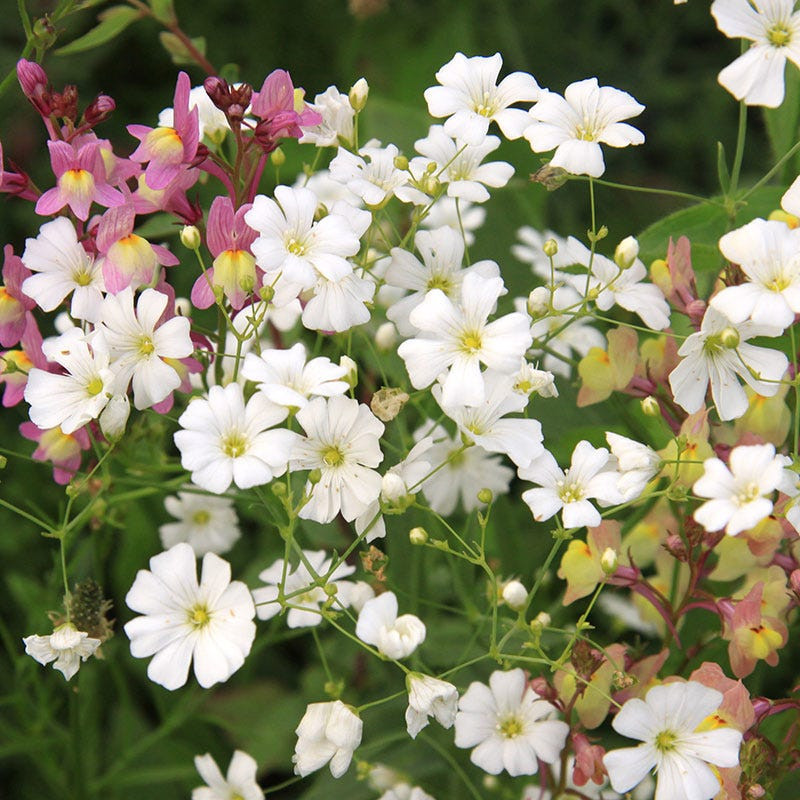
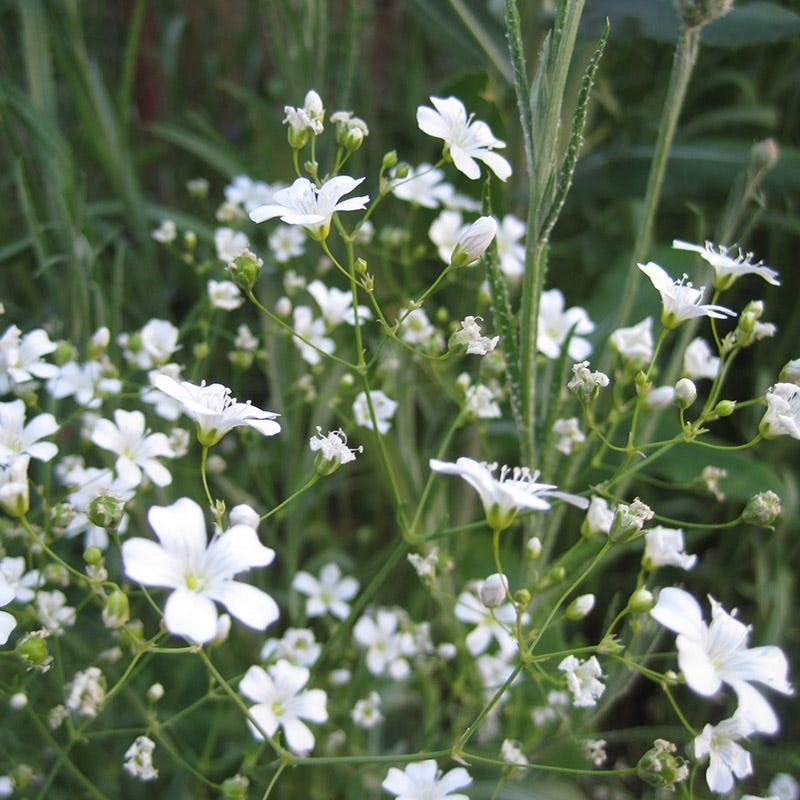
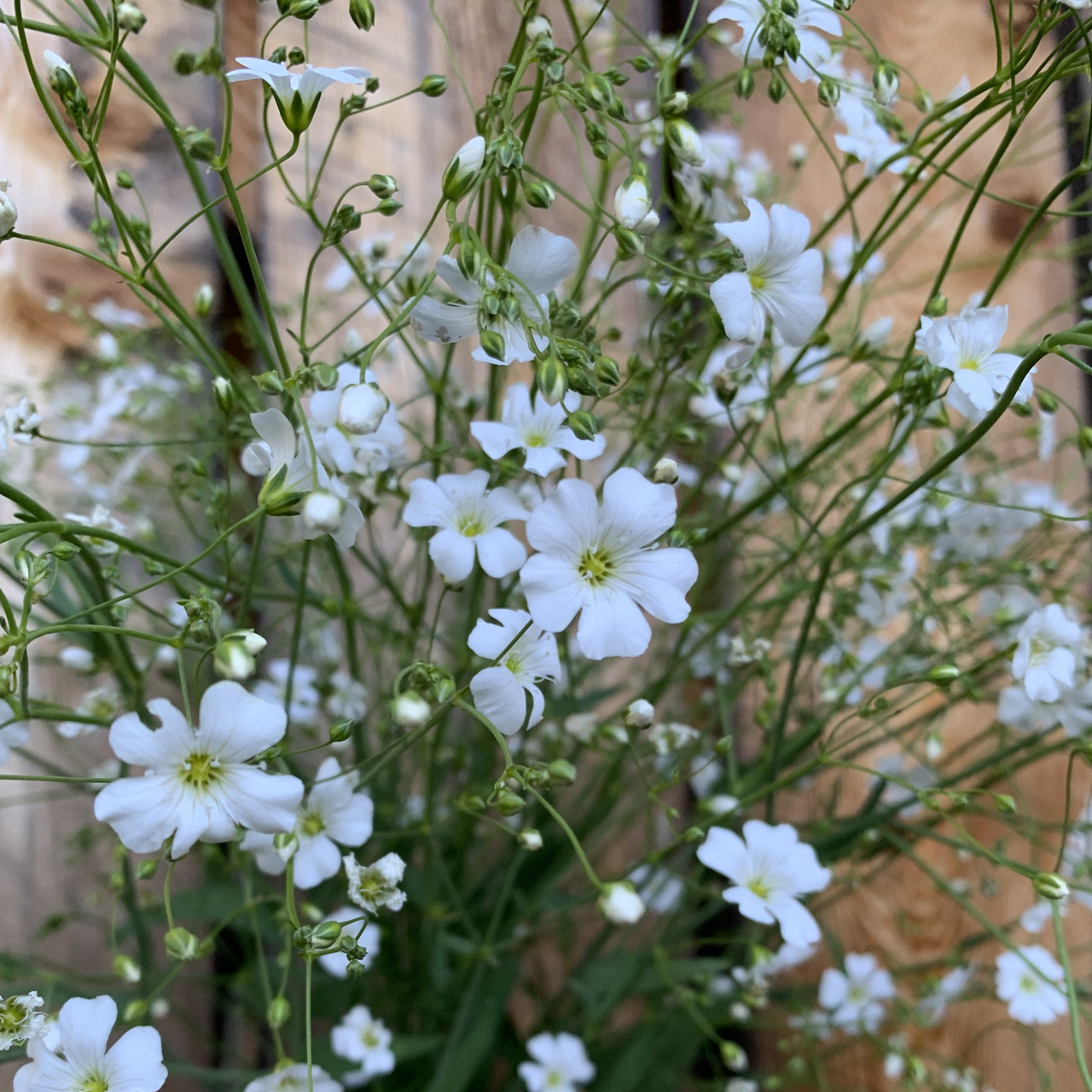
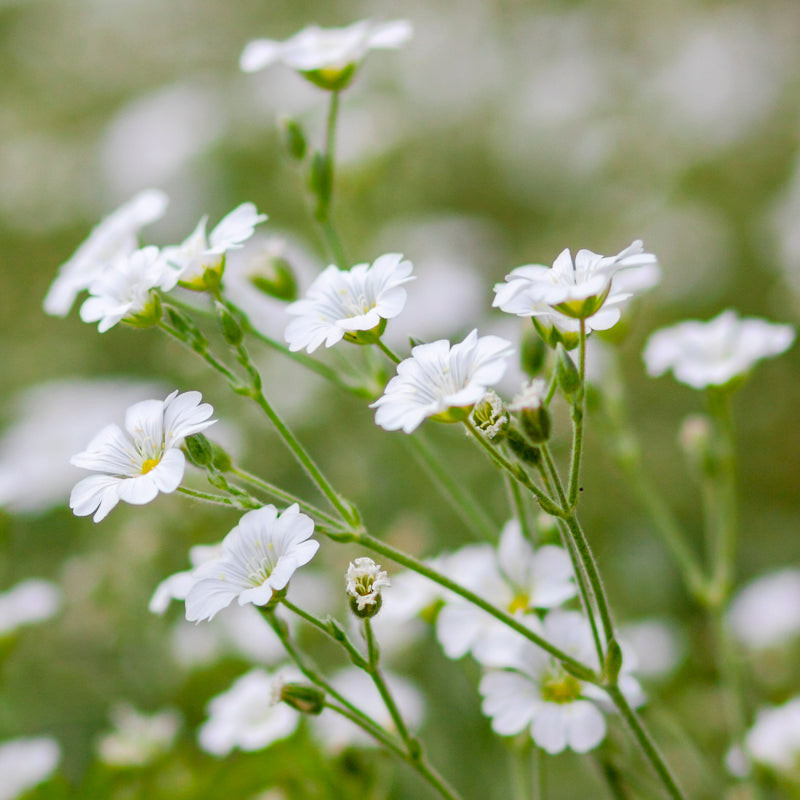
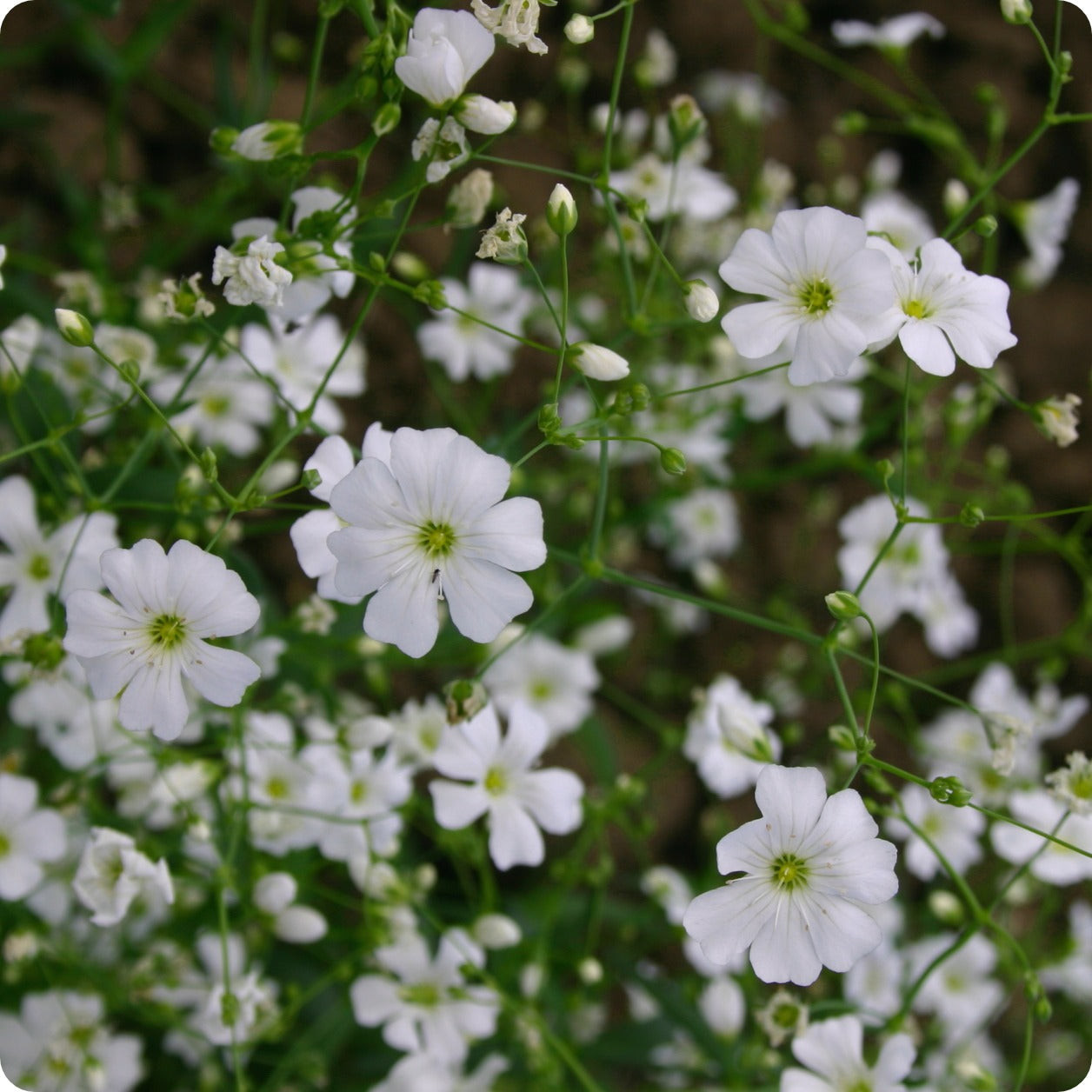


Baby’s Breath (Gypsophila elegans) Seeds grow in abundance in early summer. They require full sunlight in order to grow, which means at least 6 hours per day, but they still required good quality sofa. Therefore ensure that you have been watering the soil, prior to planting the pot outside. They grow into multi-branched long stemmed plants that are invaluable in cut flower gardens. They are white and have multi-branched long stems.
When they mature they are approximately 18 inches and it is important to sow on a 3-week interval to ensure that the flowers do not die. Spacing should be around 1 inch, but then the seed spacing should be the same amount. The row sizes should be between 24-36 inches and the plant size should be approximately 8-12 inches.
It takes 10-15 days to mature; they grow to a height of approximately 18 inches. Sow the seeds outside once the frost has passed. Plant the seeds one inch part and cover the seeds with ¼ inch soil. Ensure that the spot that you are growing the seedlings is hot or at least maintains around 6 hours day.


Reviews
There are no reviews yet.